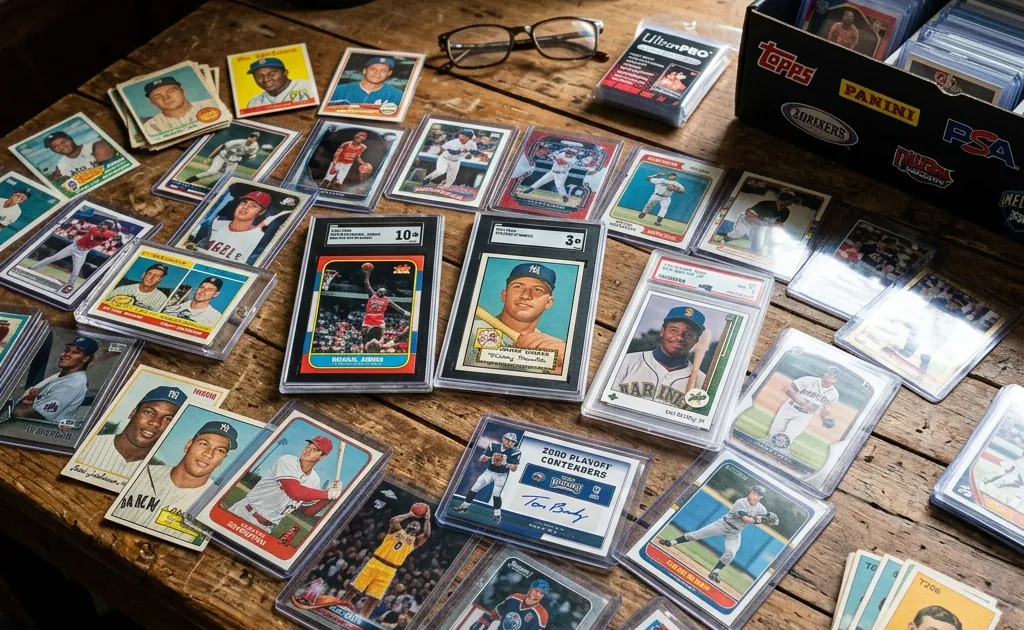
The card most collectors mean by the Michael Jordan rookie card is 1986 Fleer #57. Identify that exact issue before comparing it with the 1984 Star #101, stickers, reprints, or later Fleer cards. Condition, authenticity, grade, and transaction type can move an estimate dramatically, so a single headline sale is not a value guide.
This page gives you a repeatable identification and research process. It does not certify a raw card, promise a grade, or substitute for a professional appraisal.
Identify 1986 Fleer #57
Inspect the front and reverse together. The card is from the 1986 Fleer basketball set and carries card number 57. Record the player, year, manufacturer, product, card number, and whether the copy is raw or slabbed. A front-only photograph is not enough when counterfeits and reprints are part of the market.
| Identity field | What to record | Common mistake |
|---|---|---|
| Year and manufacturer | Fleer, 1986 | Calling a 1984 Star card or later Fleer issue “1986 Fleer.” |
| Card number | #57 | Using a search result for another Jordan card. |
| Product | 1986 Fleer basketball | Mixing the sticker, All-Star, or team cards into the base-card cohort. |
| Front design | Jordan image, Fleer Premier banner, Bulls colors | Treating a similar-looking reprint as the original. |
| Reverse | Statistics, biography, copyright, and printing details | Ignoring reverse print quality and alignment. |
| Certification | Service, grade, label, and cert number | Comparing a slabbed copy with an unverified raw listing. |
PSA’s 1986 Fleer #57 CardFacts page is a primary identity reference. Use it to verify the issue and population context; population is not a price forecast.
1986 Fleer versus 1984 Star #101
The 1984 Star #101 is important because it depicts Jordan during his rookie season, but it was distributed differently from a nationally issued Fleer wax-pack card. Collectors and catalogues may describe Star #101 as an XRC or pre-rookie issue. The 1986 Fleer #57 is the widely recognized mainstream base rookie card. Keep the two in separate search sets and label the distinction when writing a collection inventory.
Also separate the 1986 Fleer sticker, Jordan All-Star card, promotional issues, and reprints. “Jordan rookie” is a family of search language, not a license to combine every card in one average.
Condition checklist
The dark border and colored design make edge chipping and corner whitening important. Inspect the card under diffuse light and photograph both sides without a sleeve glare.
| Area | Questions to ask | Evidence to save |
|---|---|---|
| Centering | Is the border width visibly unequal? | Front and reverse measurements or a straight-on photo. |
| Corners | Are the tips sharp, rounded, or white? | Close photos of all four corners. |
| Edges | Is there chipping, rough cut, or color loss? | A note identifying each affected edge. |
| Surface | Are there scratches, print lines, dents, or stains? | Angled-light photos and a description of location. |
| Reverse print | Are text and the basketball icon crisp? | A clear reverse image at matching scale. |
| Alteration | Is there recoloring, trimming, cleaning, or pressing? | Stop and seek expert review if suspected. |
PSA’s grading standards describe the combined role of centering, corners, edges, and surface. A visual estimate is not a guaranteed grade. For a certified card, verify the label and certification separately from your own eye appeal notes.
Compare sold transactions by exact grade
Search completed sales for “1986 Fleer #57 Michael Jordan” and then narrow to the same grade or raw condition. Exclude asking prices, ungraded cards with unclear photos, lots, autographs, altered cards, and sales where the card number cannot be confirmed. Record the date and marketplace for every included result.
Jordan comparable-sale worksheet
| Candidate | Exact issue/grade | Sale date | Centering/corner notes | Sold amount | Include? |
|---|---|---|---|---|---|
| A | 1986 Fleer #57 / raw | ||||
| B | 1986 Fleer #57 / PSA 7 | ||||
| C | 1986 Fleer #57 / PSA 8 | ||||
| D | 1986 Fleer #57 / PSA 9 or higher |
The goal is a comparable cohort, not the biggest number you can find. If two close-looking cards have different grades, keep them in separate rows. A large spread may result from centering, surface condition, auction timing, buyer fees, or authenticity concerns. Explain the reason rather than averaging blindly.
Authentication is a separate decision
The Jordan #57 is widely copied. Print sharpness, the Fleer arrow, banner, reverse text, and basketball icon can help you identify suspicious copies, but no single home test proves authenticity. Compare the whole card with a trusted reference. Check the reverse as carefully as the front. A glossy scan can hide trimming or recoloring.
Do not clean, press, trim, recolor, or alter a raw card before documenting it. If the card will support a major purchase, insurance schedule, estate inventory, or sale, use a qualified authentication or grading service. A certification lookup confirms that a label record exists; it does not replace inspection of the physical card or guarantee a marketplace seller.
Grading economics
Grading can make sense when the card’s likely grade, service costs, shipping, insurance, and time are documented. Start with the raw comparable set. Then model a conservative outcome, such as the lower plausible grade, rather than the best possible grade. If the card has visible edge chipping, a crease, or uncertain authenticity, record those facts before considering submission.
| Observation | Decision |
|---|---|
| Clear crease, trim, or recoloring | Keep it raw for research or seek expert advice; do not model a gem result. |
| Clean surface but uncertain centering | Photograph and compare with published standards before deciding. |
| Slabbed card with a readable certification | Verify the cert and compare the same grade cohort. |
| High-stakes documentation need | Ask an appropriate professional about the required report, not just a marketplace estimate. |
Use a scanner carefully
The SportsCardValue scanner can suggest a candidate card, but it cannot see every surface defect or authenticate a raw Jordan. Confirm year, manufacturer, product, and #57 in print before using the result in the worksheet. If the result conflicts with the card, stop and resolve identity manually.
Keep raw and graded evidence separate
Raw Jordan listings often use optimistic language such as “near mint” or “pack fresh.” Treat those labels as seller descriptions, not as grades. Save a photo and write your own condition notes before opening the sold results. A raw card with a visible corner nick belongs in a different research cohort from a clean raw card, even if both titles say “NM.” When possible, compare the same seller’s photographs at full resolution rather than relying on a thumbnail.
For slabbed cards, record the grading company, numeric grade, qualifiers, certification number, and whether the label identifies an error, stain, or other qualification. A qualified grade is not interchangeable with a straight grade. Verify the certification through the grading company’s current lookup and compare the label with the physical slab. If the cert page cannot be found, keep the row as unverified rather than silently treating it as authenticated.
Start with a lower and upper observation from the closest matching raw or graded cohort. Then explain the variables that could move a specific copy inside that band: centering, edge chipping, surface print lines, authenticity, certification, sale venue, and timing. Do not average a raw listing with a PSA 9 sale simply because both are described as “excellent.” If the card is intended for an estate, insurance schedule, or tax record, say whether the figure is a market estimate, an appraisal, or a documented sale; those are different types of evidence.
Add a “checked on” date, retain the source URL, and mark a row obsolete if the listing is edited or removed. This matters for a heavily searched card, where results can mix the Fleer base card, Star #101, stickers, reprints, and unrelated memorabilia in one page.
Example evidence note
Suppose a raw listing shows a clean front but the reverse is missing from the photographs. Record it as “identity partly verified; condition and reverse unknown,” not as a near-mint comp. Ask for a reverse image or leave the row out. If another listing shows #57 on both sides but has a visible lower-right corner nick, record that defect and compare it only with similarly imperfect raw cards. These small notes keep an attractive front scan from quietly becoming evidence for a grade the card has not earned.
Before buying, match the seller’s photographs to the card description and check that the image is not reused across multiple listings. Ask whether the card has been cleaned, pressed, recolored, trimmed, or stored in a way that caused a crease. A “no returns” policy increases the importance of clear photographs and an authentication plan. For a slab, photograph the label and slab edges, verify the certification, and make sure the certification record describes the same issue and grade. Keep the invoice and photos with the worksheet so the eventual sale can be compared with the actual copy purchased.
When a listing is unusually cheap, do not treat the discount as proof of a bargain. Check the card number, seller history, return terms, image quality, and whether the amount is for one card or a lot. A low transaction may reflect damage, an incomplete description, or an unverified card. Conversely, a high transaction may include a strong venue, buyer protection, or unusual eye appeal. Record those circumstances instead of allowing either outlier to define the estimate.
Editorial review and related guides
This guide was reviewed October 29, 2026 using PSA CardFacts, PSA grading standards, and PSA certification resources. Marketplace sales, service fees, and population counts change, so recheck them at the time of a decision.
Identify and Research Your Sports Cards
Download the Sports Card Scanner & Value app to identify, catalog, and track baseball, basketball, and football cards. Confirm the exact card and condition before relying on an estimate.